Why Your Data Isn’t Moving Anyone Into Action
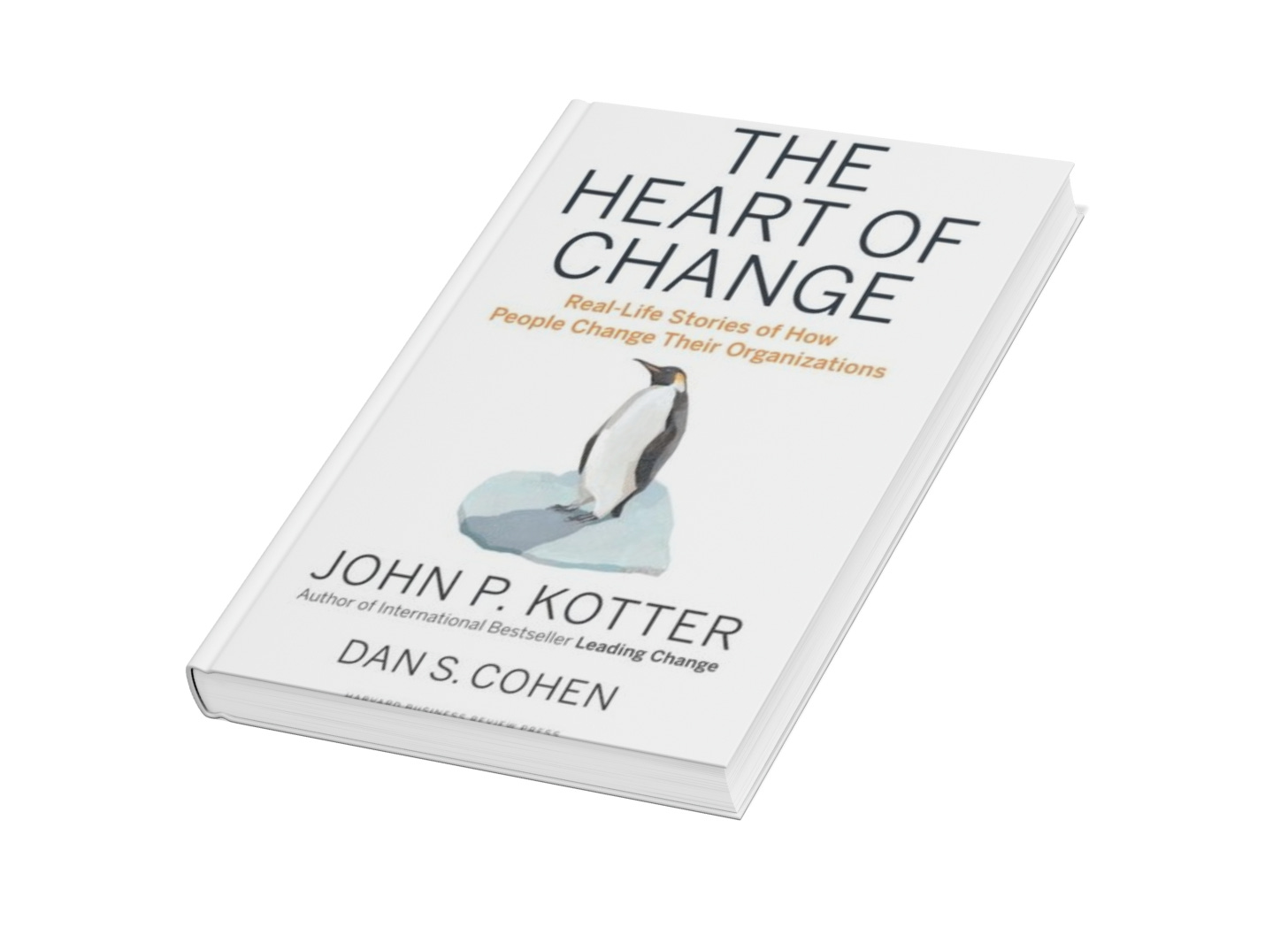
A reflection from The Heart of Change by John P. Kotter and Dan S. Cohen
Hej! It’s William!
This is part of the "Meller Highlights" series with reflections and learnings from my personal book highlights. I read a lot of books, and as a way of giving more value to my paid subscribers, I now share great book lessons specially for them.
If you’ve been following along and enjoying the ideas I share, I’d love to have you join them. Becoming a subscriber not only gives you full access, but it also helps me keep creating and going deeper with the work I do.
How do these highlights work? Every day, I pick one idea from my reading and think about how to apply it in real life. Most stay as private notes, but once a week, I choose one that feels special.
That’s the one I share here, a highlight that turns into a deeper reflection on how it can change the way we do something.
Today’s highlight: The Heart of Change by John P. Kotter and Dan S. Cohen
“Good analysis rarely motivates people in a big way. It changes thought, but how often does it send people running out the door to act in significantly new ways? And motivation is not a thinking word; it’s a feeling word.”
Let’s reflect on that…
I’ve lost count of how many times I’ve seen this happen. Weeks go into preparing slides, filling them with bullet points, charts, and forecasts. We polish the arguments, rerun the numbers, and tell ourselves that once people see the evidence, the decision will come naturally. The assumption is simple: if they understand, they will act.
Except they don’t. At least not most of the time. The gap between knowing and doing is bigger than most leaders want to admit.
The truth is that decisions almost never start in a spreadsheet. They start in the gut.
Change usually comes because something feels unbearable, or because a spark of hope shows a better way forward. Frustration, fear, excitement (these are the real triggers of action), not a pie chart.
Think about your own life for a second. Did you ever leave a job because a financial model told you to, or because you simply couldn’t stand another Monday in that place?
Did you start something new because a forecast proved its potential, or because the idea itself gave you energy?
Numbers may have supported your choice, but the tipping point came from emotion.
Even in environments that pride themselves on rationality (engineering, finance, science), the pattern repeats. Teams can review data for months, but the moment of action often comes when someone says, “This cannot go on.”
That short sentence weighs more than a slide showing a 12 percent drop. And that is not a weakness. That is simply how humans work.
So why do we keep pretending it is different?
Leaders still talk as if logic alone were enough. But communication built only on reason often fades away. Strategies that rely only on numbers rarely inspire. If you want people to move, you have to speak to both the mind and the heart.
And no, this is not about manipulation. It is about empathy. About paying attention to what keeps people awake at night and what gives them energy in the morning. Numbers can clarify, but they do not create urgency. Stories, symbols, and shared feelings do.
History leaves no doubt about this. The civil rights movement did not grow because statistics proved inequality (even if the data were overwhelming).
It grew when people saw images that caused outrage, when injustice could no longer be tolerated.
The Berlin Wall did not fall because someone wrote a report about economic inefficiency. It fell because people decided they had had enough.
Inside companies, it works the same way. Big changes rarely succeed because of a carefully calculated business case. They succeed when people feel the old way cannot continue, or when they glimpse a better possibility. The numbers may support the case, but they come after the feeling, not before it.
And here is the part I keep reflecting on: what moments really changed your own direction? Was it the time you left? The time you started? The time you stood up? Did any of those come from a chart, or from a feeling so strong that you had to move?
If we already know this is how change works, maybe leadership is not as complicated as we make it. We don’t need to make people understand everything. We need to help them feel enough to act. Data sharpens the view, but emotion moves the step. That is the piece we keep forgetting.
This is part of the "Meller Highlights" series with reflections from my personal book highlights.