

Why Happiness Doesn’t Work Without Someone to Share It With
A reflection from Letters From a Stoic by Seneca

Hej! It’s William!
This is part of the “Meller Highlights“ series with reflections and learnings from my personal book highlights. I read a lot of books, and as a way of giving more value to my paid subscribers, I now share great book lessons specially for them.
If you’ve been following along and enjoying the ideas I share, I’d love to have you join them. Becoming a premium subscriber not only gives you full access, but it also helps me keep creating and going deeper with the work I do.
How do these highlights work?
Every day, I pick one idea from my reading and think about how to apply it in real life. Most stay as private notes, but once a week, I choose one that feels special.
That’s the one I share here, a highlight that turns into a deeper reflection on how it can change the way we do something.
Today’s highlight: Letters From a Stoic by Seneca
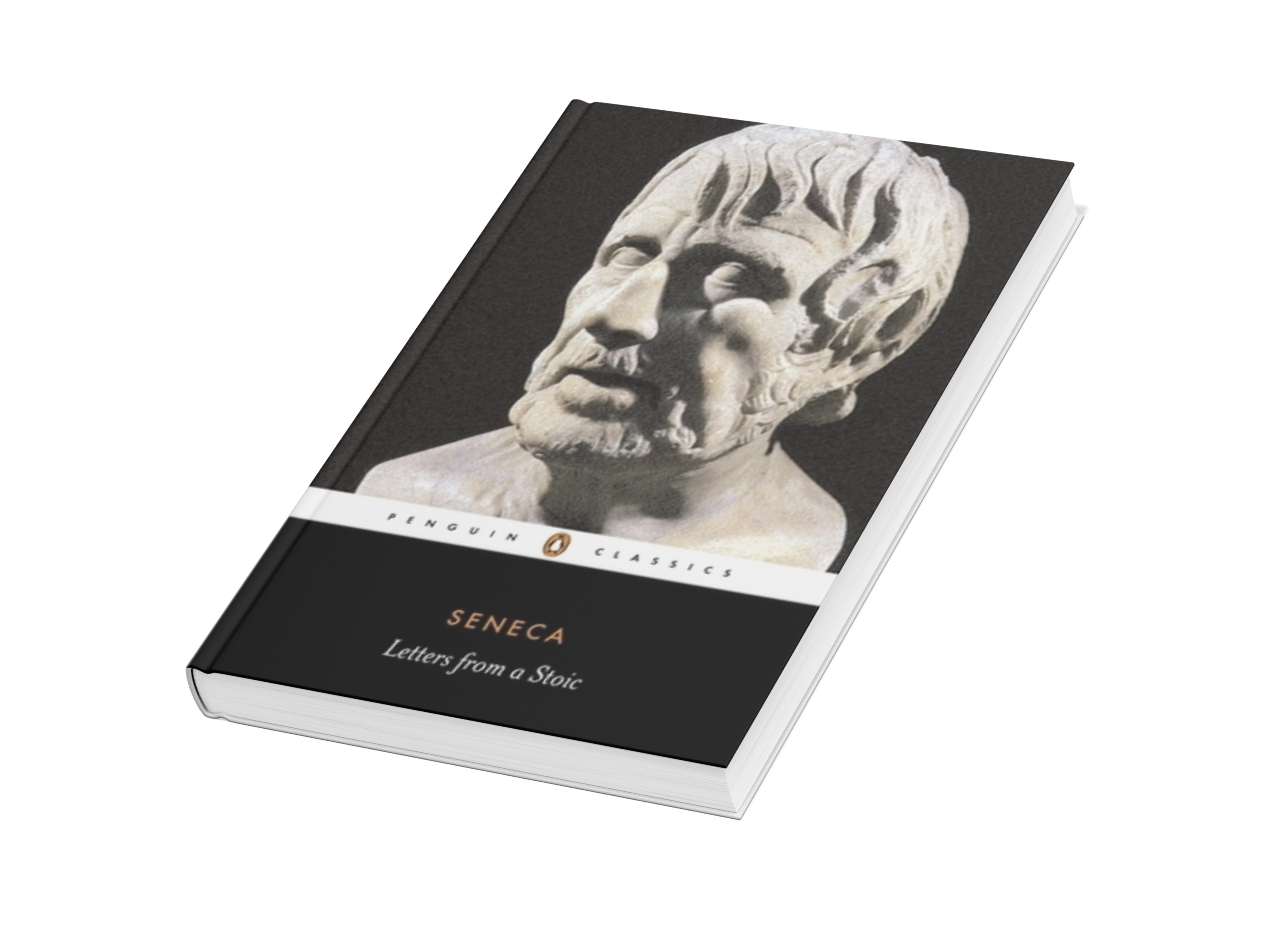
“… There is no enjoying the possession of anything valuable unless one has someone to share it with...”
Let me start with a simple question.
When something good happens to you, what is the first thing you do?
You probably reach for your phone to tell someone.
Maybe you send a message, make a call, or share a picture.
Why?
Because joy feels incomplete if it stays locked inside.
Seneca understood that better than most. He believed that value becomes real only through connection.
The thing itself may be wonderful, but without someone to witness it, it feels strangely hollow.
The Quiet Room Test
Picture this. You finally accomplish something big. A promotion, a personal milestone, or just a goal that took a long time to reach. Y
ou walk into your living room, full of excitement, and realize there is nobody there to tell.
No one to high-five. No one to smile with you. Suddenly, the moment feels smaller.
That’s what Seneca meant. Possession, by itself, is only potential joy. Sharing turns it into meaning.
We often talk about success as something personal, something that belongs to us alone.
But every good thing gets brighter when shared. It is like light reflecting off another surface. Without that reflection, it fades faster than we expect.
The Myth of Self-Sufficiency
Modern culture loves the idea of independence. We celebrate people who “make it on their own,” who need nothing from anyone. But the truth is, no one really does.
Every person’s story is quietly built on others. Teachers, friends, partners, even the strangers who inspired us without knowing.
Seneca was not against strength or solitude. He simply saw that isolation turns victory into emptiness. You can be strong alone, but you can only be fulfilled together.
Even Stoicism, often misread as emotional detachment, was about harmony, not isolation. The Stoics believed the highest form of virtue was living well with others, acting in ways that improved the shared human experience.
So the next time you feel like saying, “I don’t need anyone,” remember Seneca. He would raise an eyebrow and ask, “Then who will you enjoy your success with?”
The Science of Sharing
Psychology actually backs him up. Studies on happiness from Harvard and Yale show that experiences shared with others are felt as more intense and more memorable.
When two people watch a movie together, even in silence, their brains show synchronized activity in regions linked to emotion. The joy doubles not because the movie is better, but because someone else feels it with you.
Our brains evolved for connection. Social validation triggers dopamine and oxytocin, the same chemicals that reward survival behaviors. That is why humans crave witnesses. It is not vanity. It is biology.
You can see it in small things. Laughter, for instance, rarely happens alone. You can smile by yourself, but full laughter usually needs another presence.
The sound of someone else laughing makes your own laughter easier, louder, freer. Joy grows by being echoed.
The Paradox of Plenty
Here is the irony. We live in the most connected time in human history, yet loneliness keeps growing.
People have hundreds of online “friends,” but very few they can call at midnight to share good news.
Our communication channels multiplied, but our sense of closeness shrank. Sharing has become performance. We post to be seen, not to connect. It feels like shouting into a crowd rather than whispering to someone who truly knows us.
Seneca, writing from ancient Rome, would have found this bizarre. He warned that wealth, fame, or power mean nothing if they are detached from genuine relationships.
His philosophy was not anti-success. It was anti-emptiness.
The deeper you look, the clearer it becomes. The more we chase individual achievement, the more fragile our joy becomes. Because joy, unlike success, does not scale. It multiplies only through presence.
Why Connection Changes Value
Have you noticed how ordinary things become special when shared?
Coffee tastes better with someone sitting across the table. A song hits deeper when you play it for someone who understands. Even silence feels softer when another person shares it with you.
That is the strange mathematics of meaning. Sharing divides the moment but multiplies its impact.
Seneca would probably say that possessions, achievements, and even wisdom are sterile until they enter exchange. You can read a hundred books and still feel lonely if you never discuss a single idea. The act of sharing turns personal growth into collective progress.
Success Without Witnesses
Imagine working for years toward something, finally succeeding, and realizing no one even noticed.
At first, you might feel proud. But then the emptiness creeps in.
The effort meant something to you, yes, but part of you wanted it to mean something to someone else, too.
That is not a weakness. It is human wiring. We are social learners. We understand ourselves through reflection.
The philosopher Charles Cooley called it “the looking-glass self.” We become who we think others see. Without mirrors, our sense of identity fades.
That is why solitude, when prolonged, often distorts perception. You stop seeing yourself clearly because there is no feedback, no reference point. Sharing restores that balance. It grounds us again in reality.
The Power of Witness
One of the most beautiful things in life is being someone’s witness. Seeing their growth, their effort, their joy. And letting them see yours. It’s what keeps relationships alive beyond words.
Seneca’s message is a gentle reminder that even the strongest people need that exchange. Joy without witness becomes self-contained, like music that never leaves the instrument.
Think of it as energy. If you trap it, it fades. If you let it circulate, it expands.
The Everyday Practice of Sharing
Sharing does not have to be grand. It can be as simple as sending a message that says, “This made me think of you.” It can be cooking for someone, forwarding a quote, or telling a story that mattered to you. The act itself is small, but the echo it creates lasts.
Connection is built into these little bridges. The more we build them, the more meaning we feel in our own experiences.
And no, this is not about becoming sentimental or dependent. It is about balance. Seneca was teaching perspective, not dependency. He believed joy comes from using what you have to enrich the lives of others, and in doing so, enriching your own.
What We Miss When We Forget
When life gets busy, it’s easy to turn inward. You start focusing on goals, tasks, and progress, forgetting that half the joy lies in celebration.
The Stoics had a word for this kind of forgetfulness—acedia, the dulling of the soul through neglect of meaning.
We experience it when we reach the goal but feel strangely underwhelmed. That feeling isn’t failure. It’s a signal. It’s your mind reminding you that you skipped the sharing part.
Maybe the next time you achieve something, don’t rush to the next task. Pause. Call someone. Celebrate together, even briefly. Let the joy breathe.
Because joy wants to be seen.
The Real Treasure
Seneca wrote his letters to a friend named Lucilius. Every one of those letters was an act of sharing. His wisdom didn’t become philosophy until he offered it to someone else.
That’s the final lesson here. Possession is temporary, but what you give away stays.
The moment you share knowledge, joy, or kindness, it leaves your hands but not your influence.
We keep chasing possessions, but what truly lasts are the connections they create.
So, whatever you are building, collecting, or learning—make sure someone else gets to see it.
Tell them the story behind it. Let them feel the spark that made it valuable to you.
Because as Seneca said, there is no real enjoyment in anything valuable unless you share it. And deep down, you already know that’s true.
This is part of the “Meller Highlights“ series with reflections from my personal book highlights.
This is exactly what project managers should be doing, sharing success with their teams, their customers and, finally their project boards.