Want Smarter Teams? Stop Solving Everything For Them
A reflection from Quiet Leadership by David Rock
Hej! It’s William!
This is part of the "Meller Highlights" series with reflections and learnings from my personal book highlights. As mentioned here, this series is now something I’m keeping special for the people who support this channel as paid subscribers.
If you’ve been following along and enjoying the ideas I share, I’d love to have you join them. Becoming a subscriber not only gives you full access, but it also helps me keep creating and going deeper with the work I do.
How do these highlights work? Every day I pick one idea from my reading and think about how to apply it in real life. Most stay as private notes, but once a week, I choose one that feels special.
That’s the one I share here, a highlight that turns into a deeper reflection on how it can change the way we do something.
Today’s highlight: Quiet Leadership by David Rock
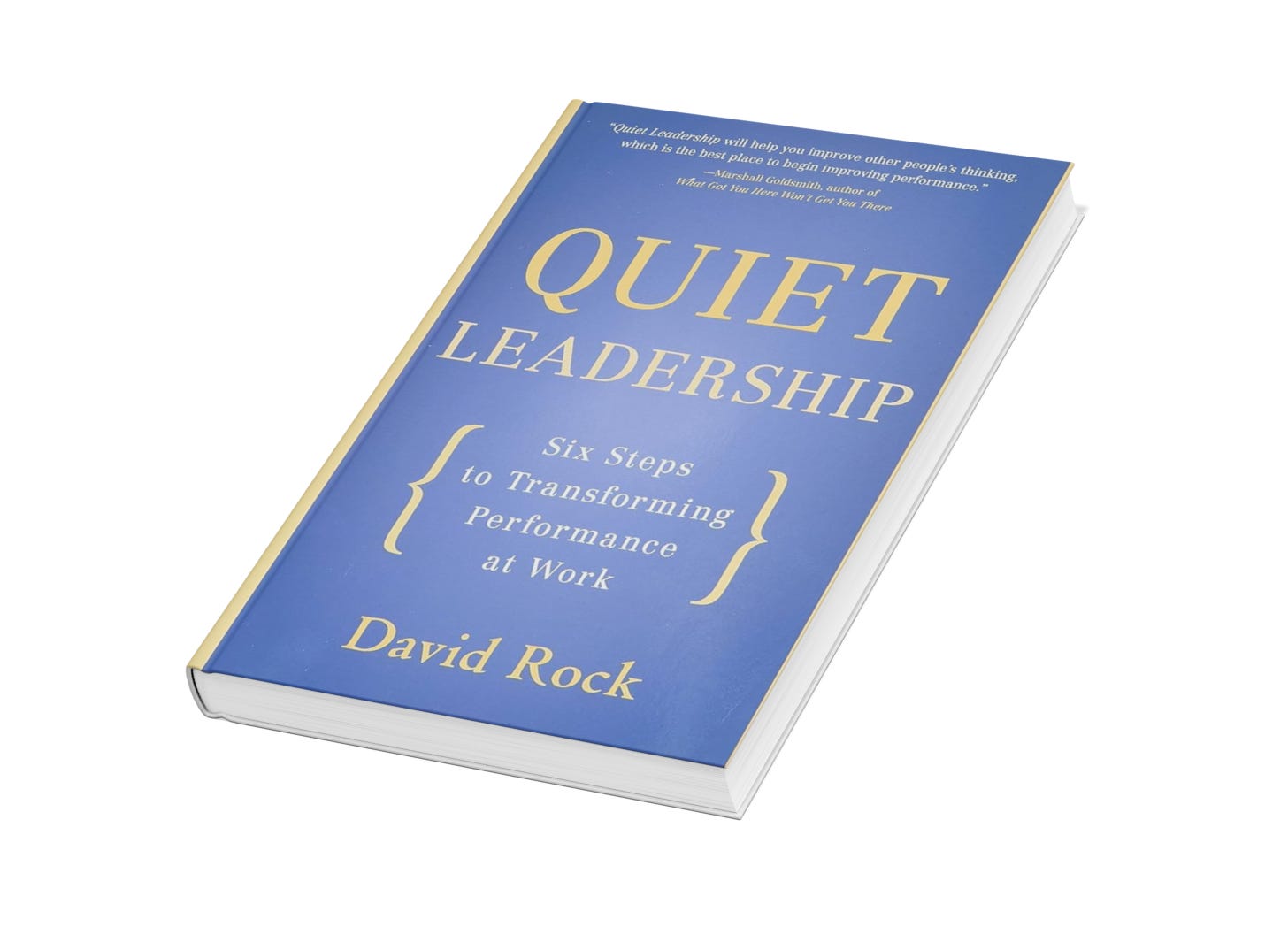
“The first priority is always to help people come up with their own answers by making new connections themselves.”
Let’s reflect on that…
A lot of leaders, even good ones, can fall into the trap of solving everything.
A team member brings a problem, and the instinct is to fix it. Say what to do. Give the plan. Save time. Be helpful.
But here’s the thing: every time we do that, we steal a little growth from the person.
If someone always comes to you for the answer, and you always give it, they never really learn to trust their own thinking.
They might respect you, but they don’t develop themselves.
And over time, that turns into quiet dependency.
They stop trying first.
They wait.
They copy.
They repeat your words instead of forming their own.
It’s subtle. But it weakens the team without anyone noticing.
Helping someone think for themselves doesn’t mean leaving them alone. It means showing up with a different kind of presence. More questions, fewer instructions. More patience, less control. It means holding back a little so they can step forward.
You know what helps?
Getting comfortable with silence.
Letting people pause. Letting them say “I don’t know” without rushing to fill the gap.
Trusting that if you ask the right question, they’ll probably find more than you expected.
And when they find the answer themselves, it sticks in a different way.
It’s something they built. And that builds confidence. That builds clarity.
In a way, leadership is not about having the answers.
It’s about helping others discover that they already had them, but just needed a space to connect the dots.
This matters even more as teams grow. You simply can’t scale a team of people who depend on you to think for them.
But you can grow fast if your people know how to think independently, take initiative, and feel safe making decisions.
So maybe today’s reminder is simple…
Next time someone brings a problem, pause before answering.
Ask what they think first.
Ask what they’ve tried.
Ask what’s getting in the way.
Let them find their own path with you beside them, not ahead of them.
Have you ever worked with someone who helped you think better, not just do more?
Or have you been that person for someone else? If you feel like sharing, I’d really like to hear your story.
If you want to keep getting reflections like this one in your inbox, subscribe to Meller Notes.