

Think, Specialize, Listen, and Stop Blaming: The Shortcut Is Expensive
Meller Notes Podcast #022 curating content on career, leadership, and management for your personal and professional development.

I caught myself doing it again the other day.
An email came in. It needed maybe ninety seconds of actual thinking, three facts stitched together, nothing hard. And instead of writing it, I dropped it into the AI, asked for a draft, and moved on. Saved myself 49 seconds probably.
Once is fine. Twice is fine. The problem starts when it becomes the default for everything.
I went looking at four different stories this week, and on the surface they have nothing to do with each other.
Artificial intelligence, an old career debate, customer complaints, and a fatal self-driving car crash. The more I read, the more the same thread showed up in all four.
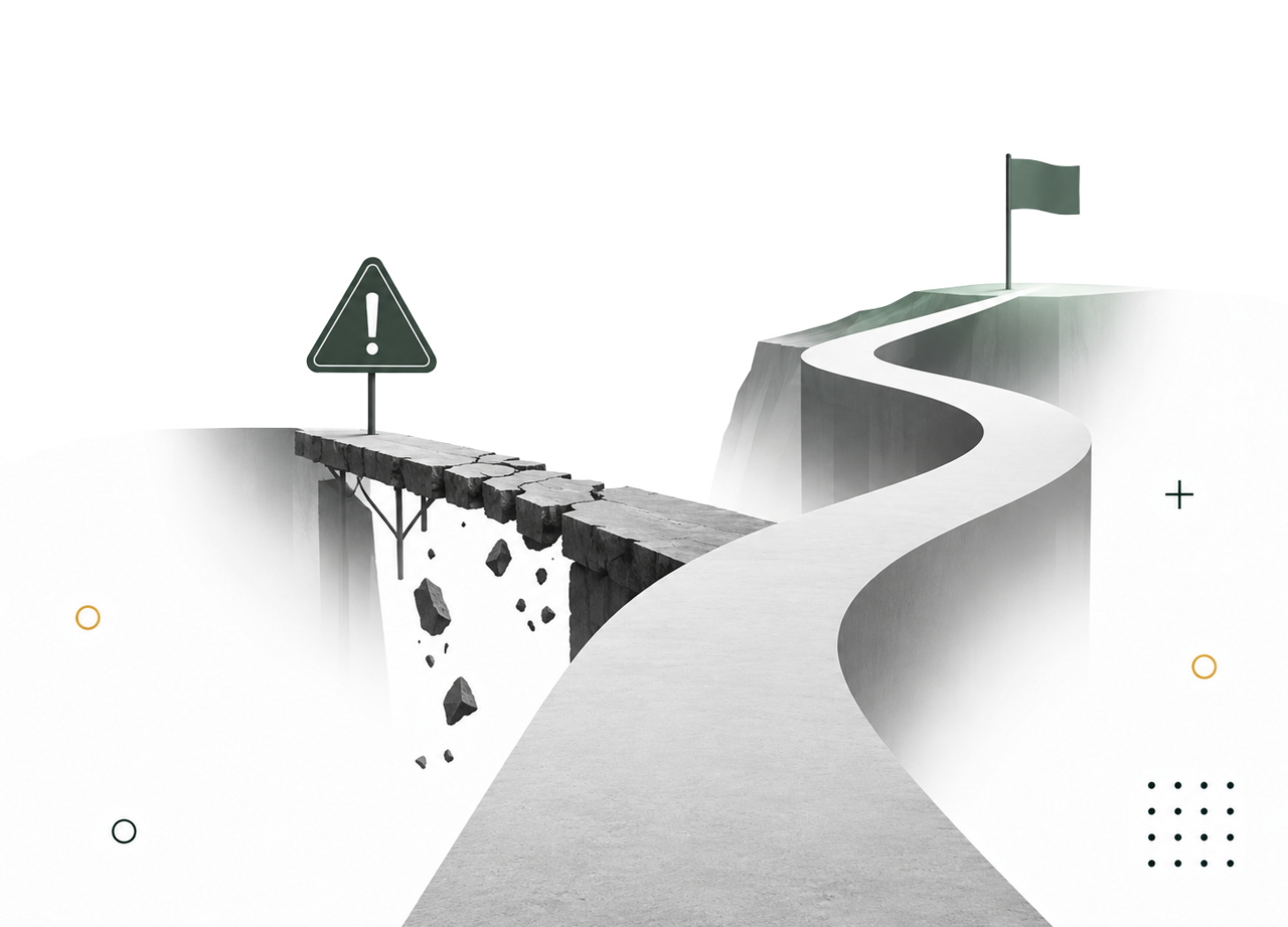
We live in an age obsessed with shortcuts. And in every one of these cases, the shortcut costs more than it looks like, and the bill arrives later, long after you have forgotten you took it. The people who do the real work come out ahead, mostly because almost nobody else is willing to.
If you cannot think without the machine
A professor at MIT Sloan named Eric So gave a name to something I feel every day. He calls it AI gravity. The constant pull to outsource your thinking to the machine in the name of efficiency. Everyone is using it, everyone is talking about it, nobody wants to be left out.
Here is the quiet danger. Your brain works like a muscle. Stop using it, and it weakens, slowly, without any alarm going off. When you are young you barely notice. The bill lands decades later.
There is a number floating around this topic that stops you cold. A study out of the MIT Media Lab had people write essays using ChatGPT, and 83% of them could not quote a single sentence of what they had just handed in. The information went from the screen straight into the work, without ever passing through the brain.
I need to be honest about that number, because it is too clean to throw around. It comes from a preprint, still under peer review, and it has already taken methodological criticism. So I hold it loosely. But Eric So’s core point does not rest on that one study. It is simpler and harder than that. If we cannot think without these machines, then maybe we are not really thinking.
The point is not to drop the tool. His four exits all protect the same thing, which is friction. Value the friction, because pushing through a hard problem on your own is what builds the thinking. Value who you are without AI, because the live meeting, the interview, the face-to-face negotiation are still yours. Reinvest the time the tool gives back into learning something new instead of doing more of the same, faster. And use AI to challenge you, to show you where you are wrong, instead of a machine that agrees with everything and feeds your ego.
The shortcut here is outsourcing the thinking. The bill is you, a few years from now, unable to do the sum in your head.
The specialist question just flipped
This is an old fight, especially for people early in their careers. One study says specialists earn more. Another says generalists go further. So you stand in the middle trying to pick a side.
In 2016, research by Jennifer Merluzzi and Damon Phillips, covered in Harvard Business Review, scrambled the debate. They looked at nearly 400 graduates from top MBA programs heading into investment banking between 2008 and 2009. The finding: candidates who had specialized only in banking, from coursework to internship, got fewer offers and smaller signing bonuses, in some cases up to 48,000 dollars less than their generalist peers.
The strange part is that the specialists were, on average, stronger candidates, with more graduate work and higher grades. It is not that they were worse. In a market with heavy institutional screening, like an elite MBA, specialization loses its signaling value. The degree already proves you are qualified.
That study is ten years old. Ten years ago there was no AI in the picture. And now there is a newer number pointing the other way.
The PwC Global AI Jobs Barometer, published in 2026, looked at more than a billion job postings across six continents. It contradicts the hype. Roles that AI is “professionalizing”, meaning they now demand more human expertise, are growing twice as fast as roles AI is “democratizing”. And pay in those more specialized roles has climbed 42% higher since 2021.
So the fashionable line, be a generalist and let AI handle the rest, runs straight into the most recent data from the labor market itself. Where AI touches most, depth is what gets paid better.
The two studies do not fight as much as it seems. They describe different markets, a 2008 banking floor and a 2026 world flooded with AI. The real shift is that AI is raising the price of depth exactly where it lands. And what holds on both sides is that depth with no wider view loses too.
I like a slightly silly example for this. Picture someone who is excellent at cutting grass. Only that. They earn well, they grow, nobody does it better. Then the company promotes them to manage the people who cut grass. And they are not good at that, and they do not enjoy it. Now their time is spent away from the one thing they were best at. That is why the dual-track career exists, so you can rise as a specialist or as a leader without being forced to trade what you are good at for the next rung someone chose for you.
The question that stays is not “generalist or specialist”. It is simpler. What are you genuinely good at? Where does nobody replace you easily?
A complaint is data, not noise
Now think about anyone who takes customer complaints. Most organizations treat a complaint as a nuisance. Something to contain, apologize for, and clear out of the way as fast as possible. And keeping the customer happy is the right instinct. One thing does not cancel the other.
But a recent study in MIT Sloan Management Review, by Lohyd Terrier and Béatrice Schaad Noble, looks at a Swiss hospital, the Vaud University Hospital, known as CHUV. For more than a decade they have done something different. They treat every patient complaint as an early-warning system and as free research and development.
In practice, the hospital gathers complaints in an internal center, and each negative point gets studied so it never happens again. The core line of the study runs roughly like this: when complaints are treated as data rather than as disturbance, organizations respond faster, learn more, and improve their services.
It makes sense. A complaint arrives long before any polite satisfaction survey. You talk to a thousand customers, two complain, and it is those two who get your attention. It comes unfiltered, with no marketing department in the middle, for free. It is the most honest and cheapest information the company receives.
The shortcut is to resolve it fast and bury it. The bill is throwing out, every week, the best improvement lab the business has. And this is not unique to hospitals. Any field that receives a complaint, from a customer, a student, a patient, a colleague, can ask the same question. What is this complaint trying to teach me that I have not heard yet?
When there is no single person to blame
One night in 2018, a self-driving Uber struck and killed a pedestrian in Tempe, Arizona. And immediately came the question with no easy answer.
Whose fault was it? The safety driver in the car? The engineer who wrote the algorithm? Uber’s leadership? Whoever approved the test?
François-Xavier de Vaujany and Aurélie Leclercq-Vandelannoitte published a framework on this in MIT Sloan Management Review in 2026, built on their own research in MIS Quarterly. They call it narrative responsibility. A way to reconstruct the whole story behind a failure instead of simply hunting for a culprit.
The old model of responsibility rests on three assumptions. That the world is linear, that you can trace cause and effect in a straight line, and that there is always one person whose choices caused the outcome. That model broke.
The clearest example is the Boeing 737 MAX. After two crashes killed 346 people, in 2018 and 2019, CEO Dennis Muilenburg was removed, as the visible answer to the crisis. Yet even with the firing and the successor’s promises of cultural change, the failures continued. Until, in 2024, a door plug blew out mid-flight, and another CEO left. Removing one person rarely fixes the deeper cause of a failure that belongs to the whole organization.
There was a similar case in 2022, when an Amazon delivery drone crashed in Oregon. The real responsibility was spread across programmers, approval teams, and operations managers, not one person.
The authors propose three moves, and I find all three practical. Map the real story beyond the obvious. Distribute ownership instead of blame. And build reflection into the routine, not only after a crisis. Distributing ownership is the key one. It is not pointing a finger. It is recognizing that whoever took part in the decision also owns the problem when it shows up.
And here the authors keep themselves honest. Narrative responsibility is not an excuse for nobody to own anything. They warn the model can be used to dilute blame if leadership controls the story too tightly. And it does not replace any legal obligation. If a company put a product on the market and it hurt someone, the company pays for that.
In the Uber case, the official response focused on individual blame. The safety driver was charged, the self-driving program stopped. And the systemic factors, the safety culture, the regulatory gap, were documented and got little practical attention afterward. The shortcut was finding a culprit. The bill was never learning the whole lesson.
The thread that ties the four
All four point the same way.
Think for real instead of outsourcing the thinking. Build actual depth instead of buying the slogan of the moment. Treat a complaint as data instead of discomfort. And own responsibility for real instead of hunting a single culprit.
In every case the shortcut looks cheaper up front. In every case it sends the bill later. And in every case the person doing the deep work comes out ahead, not because they are smarter, but because almost nobody else wants to.
The basics done well have quietly become the rarest thing in the room.
So one question stays with me. Which of these four shortcuts will you stop taking?
Thank you for reading! ⭐️
If you find value in these reflections, you are likely missing out on the deeper, more specialized layers connected with this ecosystem built to improve you:
You Visible: For the professional who has the expertise but lacks the presence. This newsletter is designed to help you stop being a best-kept secret inside your company and start being a recognized voice for the world.
Project Management Compass: If you are tired of the “accidental” way projects are managed and want a structured roadmap for leadership and execution, this is where we get the best of Project Management and its world.