The Mistake That Costs You Every Battle
A reflection from The Art of War by Sun Tzu
Hej! It’s William!
This is part of the "Meller Highlights" series with reflections and learnings from my personal book highlights. As mentioned here, this series is now something I’m keeping special for the people who support this channel as paid subscribers.
If you’ve been following along and enjoying the ideas I share, I’d love to have you join them. Becoming a subscriber not only gives you full access, but it also helps me keep creating and going deeper with the work I do.
How do these highlights work? Every day I pick one idea from my reading and think about how to apply it in real life. Most stay as private notes, but once a week, I choose one that feels special.
That’s the one I share here, a highlight that turns into a deeper reflection on how it can change the way we do something.
Today’s highlight: The Art of War by Sun Tzu
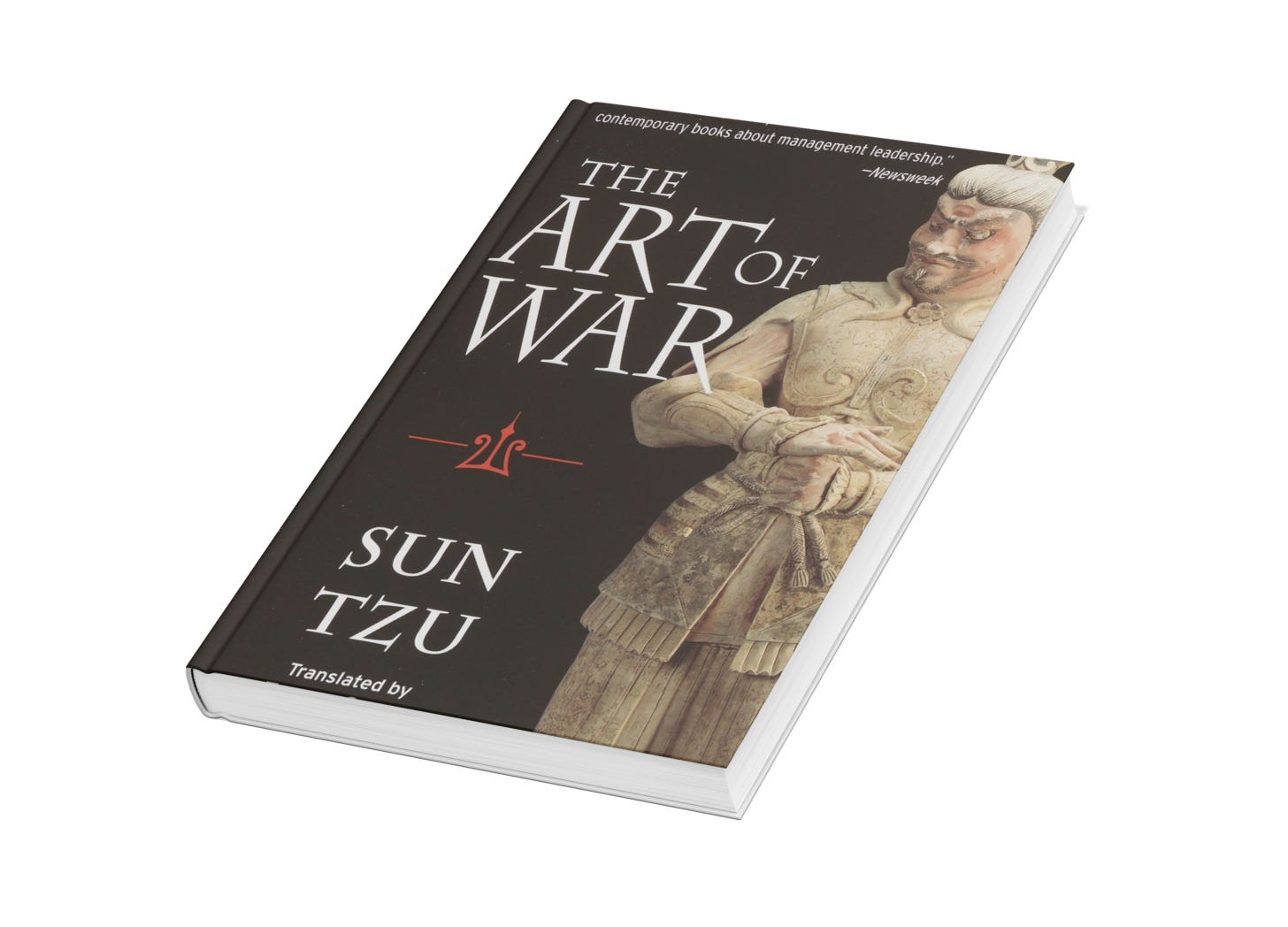
“If you know the enemy and know yourself, you need not fear the result of a hundred battles. If you know yourself but not the enemy, for every victory gained, you will also suffer a defeat. If you know neither the enemy nor yourself, you will succumb in every battle.”
Let’s reflect on that…
There’s a reason this quote is still everywhere after more than 2,000 years.
Because it’s not just about war.
It’s about every challenge, decision, and relationship in life.
And every time I read it again, it sounds a little different.
Let me explain.
We usually focus on what’s in front of us.
The project, the client, the meeting, the deadline.
That’s the "enemy" in this case, not in a bad way, just the external situation we’re trying to win.
But Sun Tzu reminds us that this isn’t enough.
If you only understand the problem but don’t understand yourself, your limits, your blind spots, your patterns, then every win might still come with a cost.
And if you don’t know either the challenge or yourself, you’re walking into the fire blind.
It sounds obvious. But when was the last time you really stopped and asked, "What do I know about myself in this situation?"
Most of the time, we just react.
We go into automatic mode.
We try to fix things, finish things, and prove ourselves.
And that’s when mistakes pile up.
Knowing yourself doesn’t mean having everything figured out. It means being honest.
Knowing how you work under pressure.
Knowing what throws you off.
Knowing what kind of conflict drains your energy.
And also knowing what kind of problem actually brings out your best.
It’s not self-help talk. It’s just practical.
If you walk into something hard, knowing how you tend to act, it’s much easier to avoid the traps.
Now, the second part is knowing the enemy.
Again, this is not about war or violence.
It’s about knowing what you’re up against.
A difficult stakeholder.
A fast-moving project.
A system that’s not working as promised.
Or maybe a long-term goal that’s starting to feel blurry.
If you don’t understand what you’re facing, you start wasting energy. You guess. You overthink. You either get too aggressive or too passive.
You win a little here and lose a little there. And like Sun Tzu says, you end up with one victory and one defeat. A balance that gets you nowhere.
But when both things happen together, knowing yourself and understanding the challenge, that’s when things change.
Because you walk in with real clarity. Not just confidence. Clarity.
You know how far you can go. You know what tools you need. And you know how to adjust when the situation shifts.
It’s like playing a game and finally reading both your hand and the rules.
In real life, this shows up in small things.
Like preparing for a hard conversation, not just by thinking about what the other person might say, but also checking your own mindset.
Are you walking in defence? Are you too focused on winning the argument instead of solving the problem?
Or when managing a tough project, asking not just "what’s the timeline?" but also "what usually makes me slow down or lose focus?" and finding ways to work around that.
It’s not always easy.
But it’s honest work.
And over time, it builds something solid.
You stop being surprised by yourself.
You stop treating every challenge as a mystery.
And you stop blaming everything on things outside your control.
You know what? I think the most powerful part of this quote is not even about war or winning. It’s about responsibility. The quiet kind.
The one that says, before blaming the problem, before attacking the challenge, first look inside. Get to know the way you operate. Then go learn the thing you’re facing. And then start moving.
Have you ever had a moment when understanding yourself helped you deal with a tough situation better?
Or the opposite, when not knowing your own reaction made it worse? I’d really like to hear your thoughts if you feel like sharing in the comments.
This is your tip today, inspired by one of my highlights from The Art of War by Sun Tzu
If you want to keep getting reflections like this one in your inbox, subscribe to Meller Notes.