

Implementing AI at the Wrong Time? Manager Being Cutted or Saving the Talents?
Meller Notes Podcast #025 curating content on career, leadership, and management for your personal and professional development.

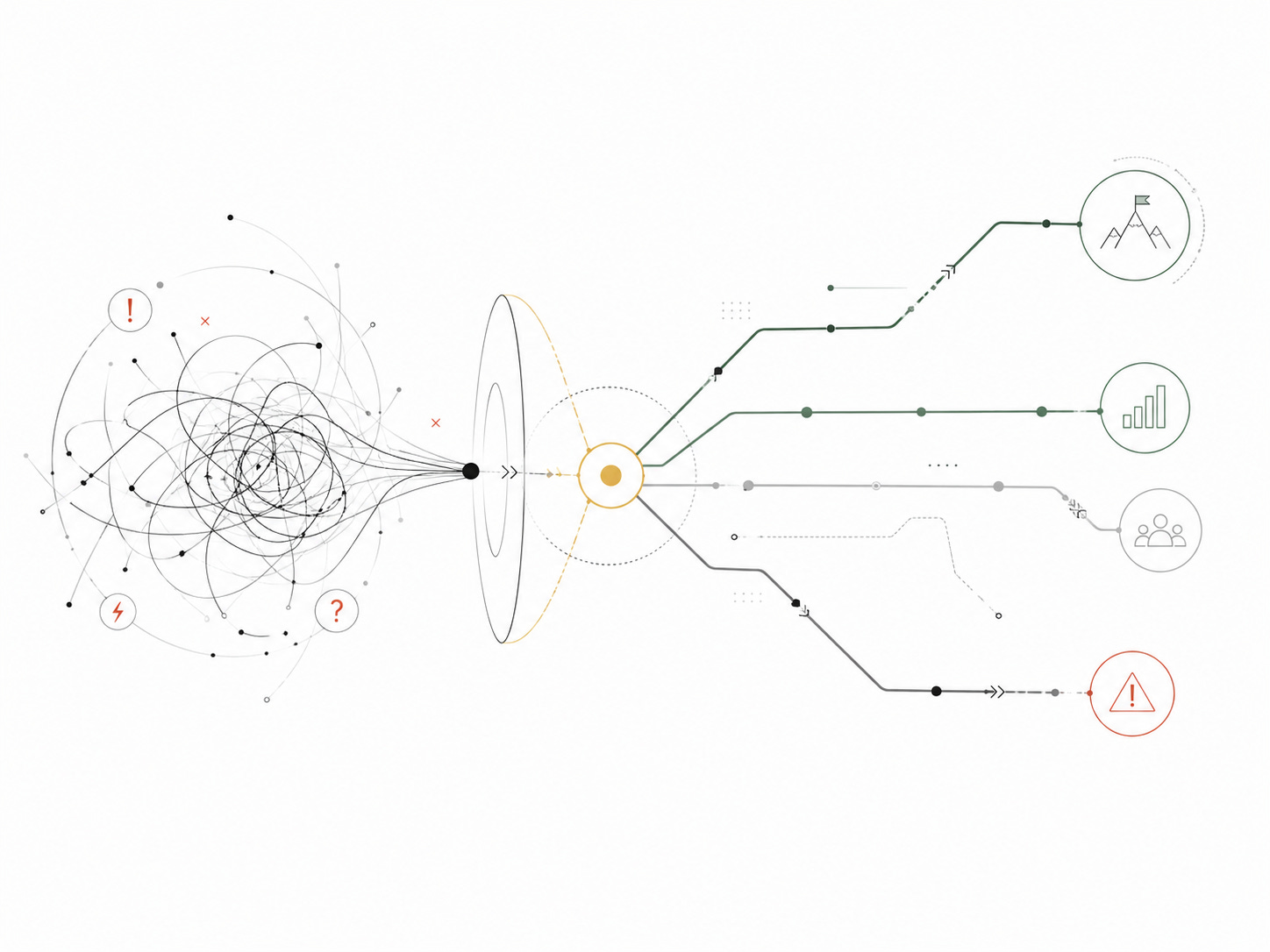
It happens the same way every time.
A company buys a serious piece of technology. Good vendor, real capability, a budget line that took months to approve. Twelve months later somebody asks where the return went, and the room turns to look at the tool.
The tool is fine. The tool was fine the whole time.
What broke was the order.
Speed became the strategy
Deloitte published the 2026 Global Human Capital Trends report, produced with Oxford Economics. It is one of the widest annual pictures of work that exists right now, built on more than 9,000 business and HR leaders across 89 countries.
The background number sets the scene. Seven in ten leaders say the most important competitive strategy for the next three years is a single thing, being faster and more agile at what they already do.
That is fair. It is what the market is asking for.
Then comes the part that costs money. In Deloitte’s survey of senior leadership, 59% go to the technology first. They buy the tool, then they think about how it will land inside the company.
Speed stopped being a goal. It became the method.
That would be the comfortable explanation. The models need another year, the vendors oversold, wait for version four.
Wrong.
Organizations that go to the technology first are almost twice as likely to miss the expected return on that technology, compared with the ones that design around the business and the people first.
Read what that number is actually saying. Same tool. Same contract. Same vendor in both groups. The only difference is the order in which it enters the house.
It is a bit like buying the dishwasher before checking where the water outlet sits. The machine is excellent. It is also standing in the middle of your kitchen, and now every conversation is about the machine when the real subject was the kitchen.
Swap the words artificial intelligence for ERP implementation and you have the same article from fifteen years ago. Swap it for digital transformation and you have the one from ten. Go back further and it is factory robotics. Go back much further and it is industrialization itself.
The problem keeps changing its face. The current face is AI.
The mistake underneath never changes. Buying the answer before being able to describe the question. If you do not know where your productivity sits today, and you do not know where it needs to be, no tool fills that gap. You do not even know which gap you are filling.
So you start running in every direction at once.
There is a failure mode worse than wasted budget, and it is the one that gets missed.
Without a clear definition of what productivity means inside that specific business, technology delivers a fake version of it. Numbers go up. Dashboard looks great. Business result stays exactly where it was.
Software is the easiest place to see it. Point AI at producing more features, more code, more output, and you will get more features, more code, more output. Work that took five days takes a morning.
More code is not more value for the customer. Sometimes quality drops, because the focus moved and nobody decided to move it.
You hit the metric. You missed the target.
The concrete move here is not sophisticated. It is boring, and boring is different from difficult.
Design the work before plugging in the tool. Which decision does this AI touch. Who reviews what it produces. Where it is allowed to run alone and where it stops and calls a human. What changes in the daily flow of the people already doing that job.
Quality standards, clear policy, guardrails. Including the boundaries of what you do not want the technology to solve, because that part is your culture and you want it working the way it works. That last one almost never gets written down.
The opening question changes too. The question is no longer which tool to buy. It is how the human and the machine will work together on this specific piece of work.
And now the honest part. Designing the work is slower. It looks worse in a board meeting than a signed contract with a well known vendor. The pressure for speed will not go away just because you are holding a Deloitte report. That tension stays with you even when you are right.
Think about the last tool your company adopted. Did anyone design the work around it, or did they switch it on and wait for the gain to show up?
The human layer disappears first
If the human design around the technology is what makes it pay off, the next question follows on its own. Which human layer does a company cut first when it wants to move fast?
Almost always the same one. The middle manager.
There is a flattening wave running right now, and it is not irrational. Companies remove layers to communicate faster, and use the saved cost to fund AI investment. The story that supports it is that AI now handles much of what the middle manager used to do, the follow ups, the status chasing, the translation between levels.
This is not only a forecast. Manager headcount already fell 6% between May 2022 and May 2025, according to Live Data Technologies, in data reported by the Wall Street Journal. That part already happened.
The most quoted projection comes from Gartner. In October 2024 it predicted that by 2026 one in five organizations would use AI to flatten their structure and eliminate more than half of middle management roles.
2026 arrived. So this stopped being a forecast and became something to check against your own org chart.
Flattening and widening cycles are normal, by the way. Look decade by decade over the last century and you will find structures shrinking and expanding several times over. Anyone who understands the cycle knows it is part of the game and positions accordingly. That is not the part that bothers me.
The interesting tension comes from two independent pieces of research, run by different people, that reached the same conclusion about where loyalty actually lives inside a team.
PwC surveyed almost 50,000 workers across 48 countries. People who build trust with their direct manager come out 72% more motivated and engaged than people who sit at a distance. PwC is careful to separate the layers, showing trust as lower with leaders at the top and higher with the immediate manager. That is proximity doing the work, not charisma.
Randstad surveyed 27,000 workers across 35 markets in its Workmonitor. Over the same period, trust in senior leadership dropped considerably, while the strong bond with the direct manager rose.
These are two different measurements. It is not the same number repeated by two sources, and I want to be clear about that, because stacking research as if it were proof has become a habit. Still, both readings point at the same place.
When a company shakes, the person holding an employee in place is the one who approves their vacation. Not the name at the top of the chart.
Here is the calculation the restructuring deck leaves out.
You had two managers, ten people each. You cut one. The survivor now has twenty. Cut again and it becomes forty.
His attention cannot possibly be the same. The real one to one, the conversation where somebody actually says what is going on with them, becomes a fifteen minute slot every couple of months. The proximity that produced those 72% is the first casualty of the span of control math.
The company aims at cost and hits the bond.
For the organization doing the flattening, the concrete move is to split what has been sitting inside one job title.
On one side, the administrative work. Reports, calendars, trackers, follow ups, status chasing, project reporting. Repetitive, bureaucratic, and honestly the part most managers enjoy least. AI handles it well. Better than most of us do.
On the other side, the human bond. The one to one, the negotiation, the motivation, knowing the quality sitting inside your team and placing each person where they are strongest. That is leadership, and it is where the gears turn.
AI removes the first part painlessly. The second one, once it leaves, does not come back on next year’s budget.
For anyone managing a team today, the reading is almost absurdly direct. You have more influence over the motivation and retention of your people than the CEO of the entire company does. The trust that keeps talent is built at your level, in your Tuesday conversation, not on the stage of the all hands.
If that trust is low, no beautifully produced communication from the top compensates for it. If it is high, it is the most underrated asset you have at work.
Now the honesty missing from most writing on this topic.
Not every middle manager is that anchor. Some layers turned into message relays and spreadsheet tracking, work that an automation does faster and without complaining. In those cases the cut is natural, and sometimes it is fair.
If you sit in one of those seats, the question turns inward. Where is your value. If you hold the position mainly because you track things well, almost a human robot, that deserves a careful look and probably a repositioning. If your real talent is connecting people and making a team worth more than the sum of its parts, this is your moment. AI is about to remove exactly the work that kept getting in the way of that.
Telling one case from the other, person by person, is human work that no report delivers finished. It stays with whoever decides.
The same story told twice
Put the two together and the shape shows up.
The company wants speed. It sacrifices the human layer. The human layer was what had been producing the result.
In the first case that layer is the work design around the AI. In the second it is the direct manager holding the team. The label changed. The mistake did not.
What both leave open is also the same. The pressure for speed is real, it is not going away, and choosing the human layer costs more in the short term. Nobody settles that bill for you.
The technical shortcut is always more visible than the human layer. That is why the human layer gets cut first, and why it is the thing everyone misses six months later.
Where, in your own work, is speed making you skip the human step that was making the whole thing work?
Sources
Deloitte, 2026 Global Human Capital Trends, with Oxford Economics: https://www.deloitte.com/us/en/insights/topics/talent/human-capital-trends.html
Deloitte, full report PDF: https://www.deloitte.com/content/dam/insights/articles/2026/us188555_ghct2026_introduction/pdf/DI_2026-Global-Human-Capital-Trends.pdf
6% decline in manager headcount between May 2022 and May 2025, Live Data Technologies, reported by the Wall Street Journal
Gartner projection from October 2024 on AI driven flattening, cited in: https://www.forbes.com/sites/cindyrodriguezconstable/2026/06/30/management-cuts-today-are-shaping-a-leadership-shortage/
PwC, Global Workforce Hopes and Fears 2025: https://www.pwc.com/gx/en/issues/workforce/hopes-and-fears.html
Randstad, Workmonitor 2026: https://www.randstad.com/workmonitor/
Thank you for reading! ⭐️
If you find value in these reflections, you are likely missing out on the deeper, more specialized layers connected with this ecosystem built to improve you:
You Visible: For the professional who has the expertise but lacks the presence. This newsletter is designed to help you stop being a best-kept secret inside your company and start being a recognized voice for the world.
Project Management Compass: If you are tired of the “accidental” way projects are managed and want a structured roadmap for leadership and execution, this is where we get the best of Project Management and its world.