How to Keep Going When It Feels Like You’re Getting Nowhere
A reflection from Switch by Chip Heath and Dan Heath
Hej! It’s William!
This is part of the "Meller Highlights" series with reflections and learnings from my personal book highlights. As mentioned here, this series is now something I’m keeping special for the people who support this channel as paid subscribers.
If you’ve been following along and enjoying the ideas I share, I’d love to have you join them. Becoming a subscriber not only gives you full access, but it also helps me keep creating and going deeper with the work I do.
How do these highlights work? Every day I pick one idea from my reading and think about how to apply it in real life. Most stay as private notes, but once a week, I choose one that feels special.
That’s the one I share here, a highlight that turns into a deeper reflection on how it can change the way we do something.
Today’s highlight: Switch by Chip Heath and Dan Heath
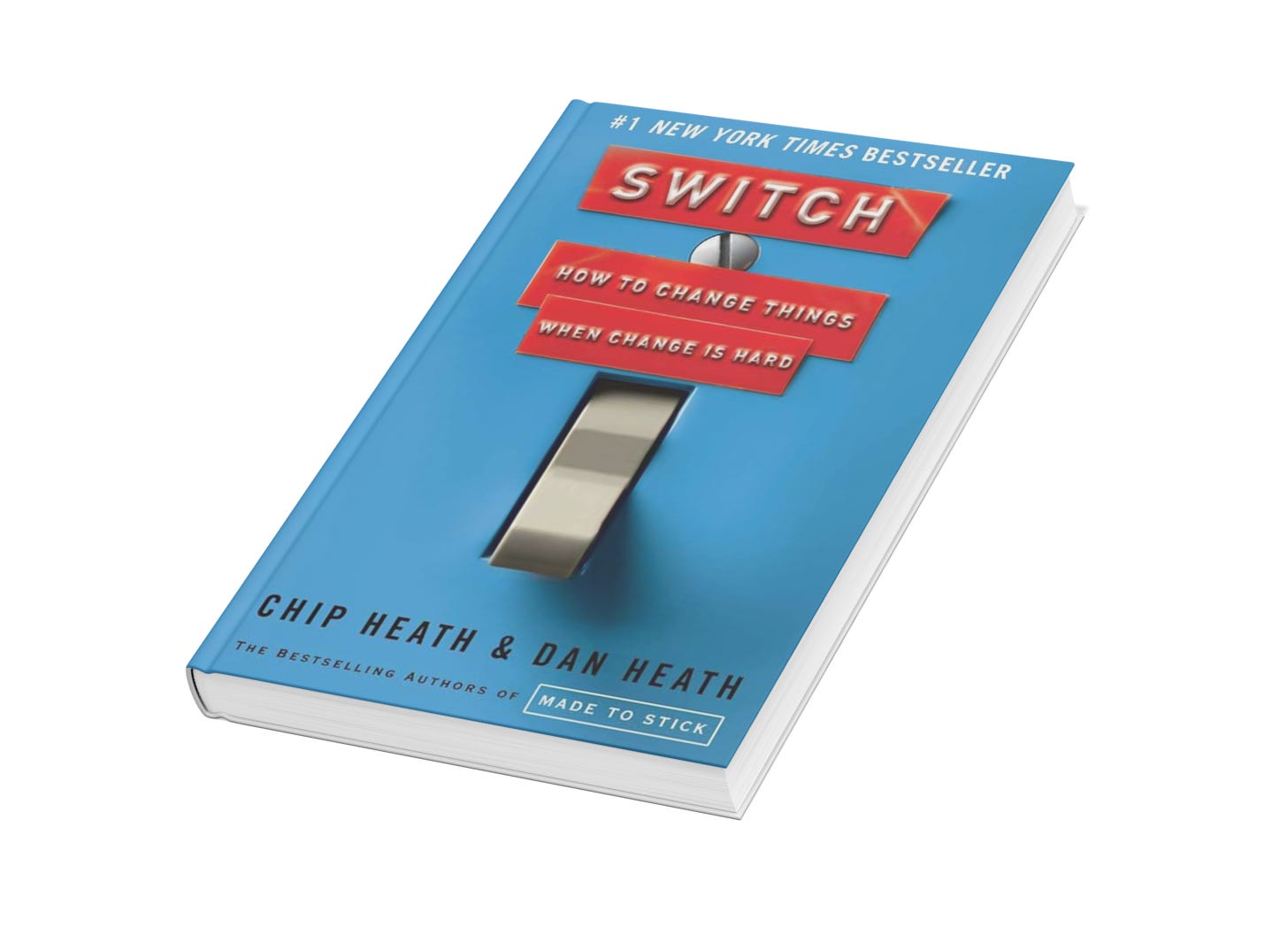
“One way to motivate action, then, is to make people feel as though they’re already closer to the finish line than they might have thought.”
Let’s reflect on that…
I think there’s something subtle in this idea, but once you see it, it changes how you lead, how you work, and how you see progress.
Most people are not stuck because they are lazy. They’re stuck because they believe they are still too far from the goal. Even when they’re not.
In your career, your projects, even your personal goals, this shows up often.
You’ve already taken a few steps, maybe some of the hardest ones, but it still feels like the real progress hasn’t started. So you hold back. You hesitate. You prepare more, waiting for some perfect signal that you’re finally ready to go all in.
But here’s the thing… Most of the time, the gap between where you are and the finish line is smaller than it seems. The problem is perception. When we don’t stop to acknowledge progress, we trick ourselves into thinking we’re still at the beginning.
There’s a simple study that explains this well. Let’s check that.
Two groups of people were given coffee loyalty cards. One group had to get 10 stamps. The other group also had to get 10 stamps, but their card already had 2 pre-filled. Guess who completed the card faster? The group that felt like they had already started. Same work. But one felt closer to the finish line.
That’s what the authors are getting at. When you see yourself as already in motion, you act like it. You stop asking “Should I?” and start asking “What’s next?” And that shift matters more than we think. It’s what turns hesitation into action.
In management, we often miss this. We celebrate milestones too late. We focus too much on what’s left. And we assume people stay motivated just because the goal matters.
But that’s not how people work. We don’t stay energized because of distant rewards. We stay motivated when we believe we are progressing.
This applies to personal careers, too. I’ve seen people who’ve built valuable experience, but because they haven’t paused to connect the dots, they still act like beginners. They’re always planning, never consolidating.
What if you stopped for a moment and asked yourself a different question?
Not “How far am I from my goal?” but “What have I already built that proves I’m closer than I thought?”
That shift might help you move forward with more confidence and less second-guessing.
The same thing happens in change initiatives. If you lead a team and want to build momentum, one of the most powerful things you can do is show progress early. Even symbolic progress. A prototype. A customer story. One internal process that improved.
It doesn’t need to be the final result. It just needs to be something real that signals motion.
Something that says: we’re not stuck. We’re already on the path.
The flywheel metaphor fits here. It’s hard to push at first, but each turn builds on the last. The earlier you help someone feel like the wheel is already turning, the more likely they are to keep pushing. Not because they are being pushed, but because they believe their effort is moving something.
So if you’re trying to create movement in your career or inside your team, maybe you don’t need a new goal or a better system.
Maybe you just need to show that the wheel has already moved. You’re not starting from zero. You’re closer than you think.
This is your daily tip, inspired by one of my Book highlights from Switch by Chip Heath and Dan Heath.
If reflections like this help you reframe how you work and lead, subscribe to Meller Notes. We build better when we remember what’s already working.
This is part of the "Meller Highlights" series with reflections from my personal book highlights.


Great points, these are manifested as stage boundaries, milestones and gateways that all, should, be forward looking otherwise they descend into bureaucratic box ticking audits.
Project managers need to consider the achievements that the team has made and consider the milestone, gateways as something that protects the team from the bureaucracy.